
The Pynchon Primer 2: Gamer's Delight
Books is video games, basically

Last October, when I wrote about Thomas Pynchon in advance of his latest novel Shadow Ticket and the concurrent release of One Battle After Another, I left the door open to a follow up post comparing the author’s work to the world of video games, if and only if one of my readers requested it. It didn’t take long for my friend Joseph Schafer (lead singer of Colony Drop, head honcho of North West Terror Fest) to put in one such request. Thanks Joe! Not long after Joseph asked me to compare Pynchon to video games, he got a head start for me by texting me to say that One Battle After Another reminded him of the game Metal Gear Solid, a “tactical espionage action” series from the mind of Hideo Kojima.
Joseph had no way of knowing this, but not only was he right about the comparison (I’m certain Joseph knew he was right, he usually does) but he had also gifted me with the perfect launching pad for the very topic that he’d requested. Kojima is one of the only figures in the gaming industry that Pynchon has referenced by name, in his fin-de-millenaire cyberpunk novel Bleeding Edge. A game designer working on DeepArcher, the novel’s equivalent to Second Life, a hyper-realistic cyberspace that briefly promises Utopian potential before (in classic Pynch fashion) becoming overrun by corporate interests, name-drops Kojima before clarifying “or, as I like to call him, God”. This dorky compliment reveals that Pynchon had an ear for the way hip games industry people gushed about Kojima in the early 00s, but it also strikes me as (forgive the obvious pun) a “game recognize game” moment from the old fella. If Pynchon the elder had watched over his son’s shoulder and caught Metal Gear Solid in progress I’m sure he could have spotted the spiritual debt Kojima’s form-breaking, goofy but deadly serious spy thriller owed to his own body of work. In the same section, Pynchon alludes to Final Fantasy X, claiming that DeepArcher’s water graphics put the 2000 offering from SquareSoft to shame. Here too I see hints of the old guard nodding to the new, implying both “I see what you did there” and “I know where you got that from”.
Metal Gear Solid and Final Fantasy both share Pynchon’s love for tonal whiplash. Metal Gear Solid will ask you to watch a 20 minute long cut scene about international arms dealing and then make you chase a cyborg ninja around an empty office. Final Fantasy VIII, my current bedtime game on the nights when I allow myself to goof off, alternates between a weepy melodrama about a school of teenage soliders for hire and highly technical data entry and inventory management. Final Fantasy loves a sprawling map and an airship, just like Against The Day. The limerick themed balloon chase and the evil octopus abduction set pieces from Gravity’s Rainbow could just as easily fit into Final Fantasy VI. If you’d asked me a year ago, I would have said that naming a character “Psycho Mantis” would be too wacky even for Pynchon, but then I read Shadow Ticket and now I’m not so sure.
I also want address the ways that books by any author resemble games of any type. How are books like video games? Well, both proceed according to the actions of the audience. Recorded music and filmed footage both continue indifferent to their audience unless explicitly manipulated to do otherwise. Books and video games on the other hand only move forward by active engagement from the reader/player. Put another way, video and audio arts are things that happen to you, but reading and playing are things that you do. You have to press the button to confirm, you have to choose when to turn a page forward and back.
Writers who, like Pynchon, publish long, involved novels with a host of characters and challenging prose go a step further by encouraging the habit of backtracking. You don’t have to play too many video games before you reflexively head backwards any time you don’t know how to proceed. Novels may not literally guard their back halves behind doors that can only be opened by a key hidden somewhere in the second paragraph of the second chapter, but forcing you to flip back a few pages to figure out who the heck this new guy is or when exactly the perspective shifted is practically the same thing. These sorts of books also frequently benefit from a “New Game+” approach, meaning you’ll get more out of them retroactively than you do in real time. These qualities aren’t unique to Pynchon’s novels, but they are especially prevalent in his work.
Recently at a dinner with friends one of the hosts and I struck up a conversation about James Joyce’s Ulysses. Ulysses has been on my bucket list for years. The host had studied Joyce academically, so I asked for their professional opinion on how to best approach the book. This was not a video game-y crowd but the host’s answer could have just as easily applied to a 60-hour long JRPG: don’t worry about trying to 100% it in one go, just dive in and have fun. Expecting to have absolute mastery of the text on the first go around is a great way to have a terrible time. You’ll get more out of the text if you allow yourself the grace to not understand it completely. Treat your read as an expression of your interests. Next time you can try another route.
As you can imagine, it only took me one hand’s worth of minutes to bring up my guy. The sheer density of subjects that Pynchon weaves through his novels guarantees that only a freakishly prepared reader could follow every strand on a first look. Instead, the books works as a kind of personality test. The mathematician will read Pynchon differently than the musician, the communist differently than the anarchist, the litbro differently than the deeply ‘noided pyschonaut. This train of thought recalled a throw-away line in Action Button’s review of the dating game Tokimeki Memorial, hypothesizing that the average player would treat the game as a one time personality test and swap stories with their friends who took completely different paths through the story. It is smart business for video games to have this kind of optionality. Game companies want to make people feel like they got their money’s worth. The medium lends itself to branching paths and multiple endings.
What’s remarkable is that Pynchon’s writing simulates the experience of this multiplicity despite working in a medium where there is only a single path from beginning to end. Pynchon novels are heavy on side quests, even if many of them are left only half completed by book’s end. His conclusions play out with the ambiguous suggestion that if the protagonist had only made one small diversion, ticked off one more achievement in the far past, things would have turned out differently. The tragedy, and what ultimately makes the experience of reading his books more rewarding than playing even the most superlative narrative games, is that there is no other way out.
As I’ve written several times when discussing Pynchon in the past, the battle between human agency and nefarious systems of control abound across his novels. Video games are also a frequent setting for this conflict. There exists a natural tension in the medium between the player’s ability to guide the narrative and the not-so-hidden guardrails placed by the game designers. Thomas Pynchon’s son is roughly my age, which means there’s a high probability that if he played video games at all he played Final Fantasy VII at least once. This in turn means there’s chance that Pynchon either witnessed Aeris’s death scene or heard about it at dinner. In case you’re not familiar, before the game’s villain finishes the job, Final Fantasy VII will not proceed unless you prompt protagonist Cloud to nearly kill love interest Aeris first. Cloud spends most of the plot suffering from chemically induced episodes of mind control. The game literalizes this by changing the inputs so that every button pushes you and Cloud closer to doing the unthinkable before he snaps out of it. Then, you get to play a snowboarding mini-game.
Final Fantasy VII and other games that similarly lean on the fourth wall (Bioshock, etc) all owe the Slothrop family a Christmas card. Tyrone Slothrop, Gravity’s Rainbow’s “hero” whose free will is split between family heritage, psycho-chemical programming, and plain old conspiracy (to say nothing of his libido), suffers from paranoia over that same question of agency. This isn’t the only way that Slothrop resembles a video game character. Slothrop’s circuitous trip across post-WW2 Germany is marked by many costume changes. Each time Slothrop switches up his look, his character adjusts accordingly. Readers who’ve navigated Final Fantasy Tactic’s class system or scrutinized the stat bonuses of different armor in a FromSoft game might find this malleability pleasantly familiar. Gamers of all stripes might be equally comfortable with the thinness of Pynchon’s characters in general.
I make this comparison not to bring Pynchon down a peg, or to stump for games by rising them up to the level of literature. Mostly I think it’s interesting that video games lend themselves so well to post-modernist techniques whether by the essence of the medium itself or the sensibilities of leading artists in the industry. Plus, if you’ve been Pynchon curious but intimidated, try treating his books like a game. Play around, have fun.
~ ~ ~ ~ ~ Listening Diary ~ ~ ~ ~ ~
Listen to this year’s diary on Apple Music.
“Playing Classics” by Water From Your Eyes (It’s A Beautiful Place, 2025)
I saw a stray comment on RYM claiming that the band had toyed around with a 20 minute version of this tune. Not exactly the most trustworthy source for info (and I haven’t yet found any corroborating evidence) but listening to “Playing Classics” I could believe it. The lead guitar riff still sounds fresh every time it returns and with such a heavy emphasis on disco-like repetition this could easily go side-long if you let it.
“Tossed Away” by Nourished By Time (The Passionate Ones, 2025)
Beautiful song, but listening to it also reminds me how easy it is to win me over sometimes. The second I heard that descending arpeggio (doubled on guitar and keys) going between major and minor and played as a 3 against 4 polyrhythm I knew I was going to love this song. That might sound like like a hyper-specific musical description, but its a common enough move that both Nourished in Time and Misery Signals do it. It works on me every time.
“Surviving You” by Hannah Frances (Nested in Tangles, 2025)
Incredible amount of sauce on this 5/4 jam. The guitars are exactly as crunchy as they should be, the sax shows up right when it needs to, the layered percussion is on point, and the double-tracked vocals have a neat way of not exactly lining up. Not a single detail of this song feels rote.
“The Thought of Death” by Yellow Eyes (Confusion Gate, 2025)
As I’ve written about before, metal’s One True Subject is the awareness of death, so obviously I saw this song title and said “hell yeah”. I then said “HELL YEAH” when that first ascending riff kicked in.
“The Reply” by Agriculture (The Spiritual Sound, 2025)
I guess it’s open season on Radiohead motifs now that they’re certified cornballs. Repurposing an Amnesiac deep cut for lefty-coded black metal is karmic communal justice. I’m cracking jokes because it makes me feel more than a little silly trying to describe how beautiful I find this song. Can I call dibs on the “Videotape” chord progression?
\ \ \ \ \ Micro Reviews / / / / /
Here are five micro reviews of albums from my vast Rate Your Music catalog. Long time Lamniformes Instagram followers will recognize these from my stories, however they’ve been re-edited and spruced up with links.
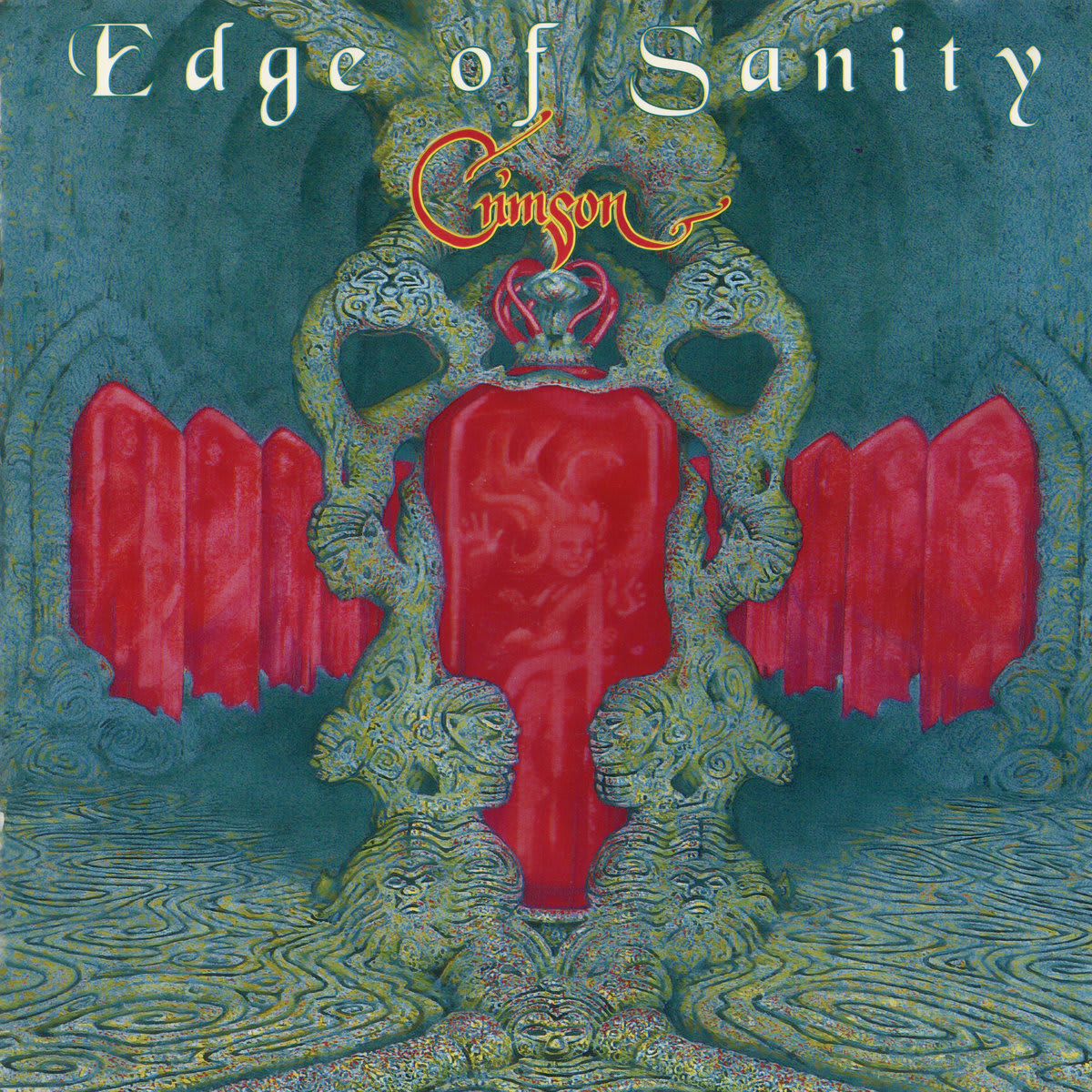
Crimson by Edge of Sanity (1996) - Death Metal
Just as the vinyl record led to the invention of the “side long epic” the CD era birthed the “single track album”. No surprise that metal, a genre blessedly lacking in any notion of restraint, would take a shine to this gimmick. What’s remarkable about this 40 minute beast of a Swedish death metal tune is that it actually feels like a single self-contained song. Rarely do Edge of Sanity hard cut from one idea to another (a common problem with 90s metal). The parts flow naturally. Even more crucial is that the band use a limited arsenal of riffs to begin with. Crimson runs through a self-contained cycle of riffs that repeats three times. In each cycle the sections change just enough (shorter, longer, different dynamics, different arrangements etc) that it never get monotonous. The cyclicality also evokes the sensation of history repeating itself over passing centuries, which from what I can gather is a key concern of the lyrics. I’m going to keep it 100%, I’m not entirely clear on the details of this album’s concept, though from what I can make out it seems like it’d make a great FromSoft game. Beyond the ambition and compositional scope, Crimson is at its heart a killer metal album, one whose complex structure and masterful performances open up with repeated listens.

Infinity by Devin Townsend (1998) - Heavy Metal
Now *this* is the real debut. No more best behavior. No more concessions to the restraints of a band. Here’s Devy, warts and all. Love it or leave it. Townsend announces himself as a rare five tool prospect in heavy music. He can sing, shred, write, produce, and has that most valuable asset: a unique sensibility. That sensibility is not for everyone. Heck, even if you like one song on this record there’s a good chance that another one will irk you. Maybe you’ll like the wall of sound of “War” and “Life Is Dynamics” but get icked by the all out goof-ball shred fest of “Ants”. Maybe you’ll dig the chilled out closer but grate against the swing-revival-but-with-riffs of “Bad Devil”. I for sure did not vibe with this record at all when I was first getting into Townsend’s music, but now I appreciate how it offers the full picture of his creativity even when it annoys me. Plus the bonus tracks offer some revealing details about his process, who knew the waltz from Deconstruction dated this far back? Neat!
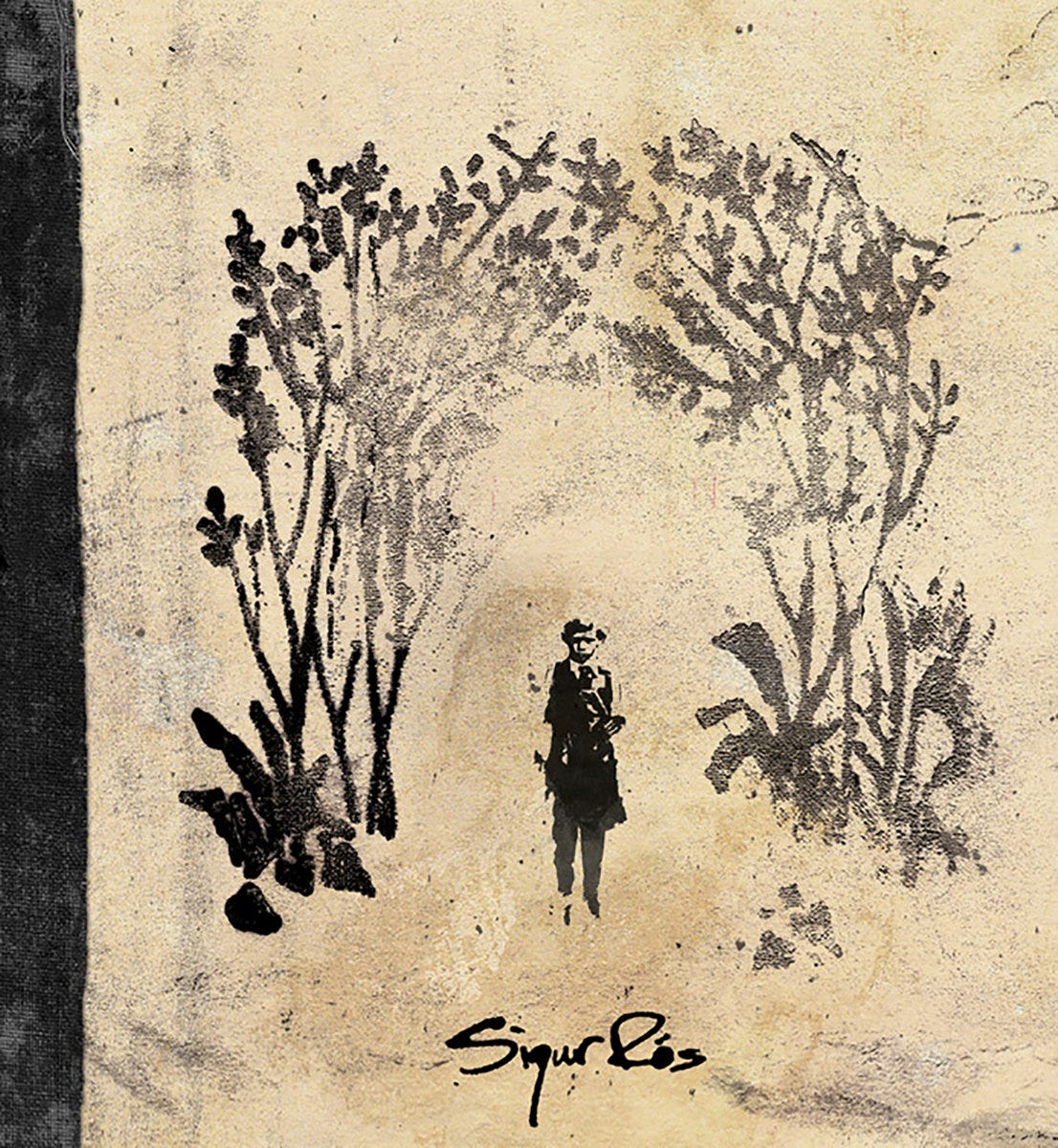
Takk… by Sigur Rós (2005) - Post-rock
As a teen I thought that this record was a step down from the austere and sparse “parentheses” record. These days I prefer the Sigur Rós albums where the studio interns remember to plug in the espresso machine. Takk… is one of those, and it might be my favorite from the Icelandic post-rockers. They may have a reputation for writing lullaby-like music, but don’t sleep on these rhythms. This record is filled with precisely written pitched percussion, as well as some slick drumming on tracks like “Gong”. There’s even a sneaky passage in 15/8 hidden beneath all the strings and marching instruments. Of course the center of it all is Jonsí’s truly insane vocal performance and the inevitable swelling crescendos. Sometimes it all gets a little too saccharine for me, but when the tunes are this luxuriously produced its hard to roll your eyes too hard. I wonder what the budget was for this record? Maybe that’s a question better asked by Iceland’s equivalent of the IRS…
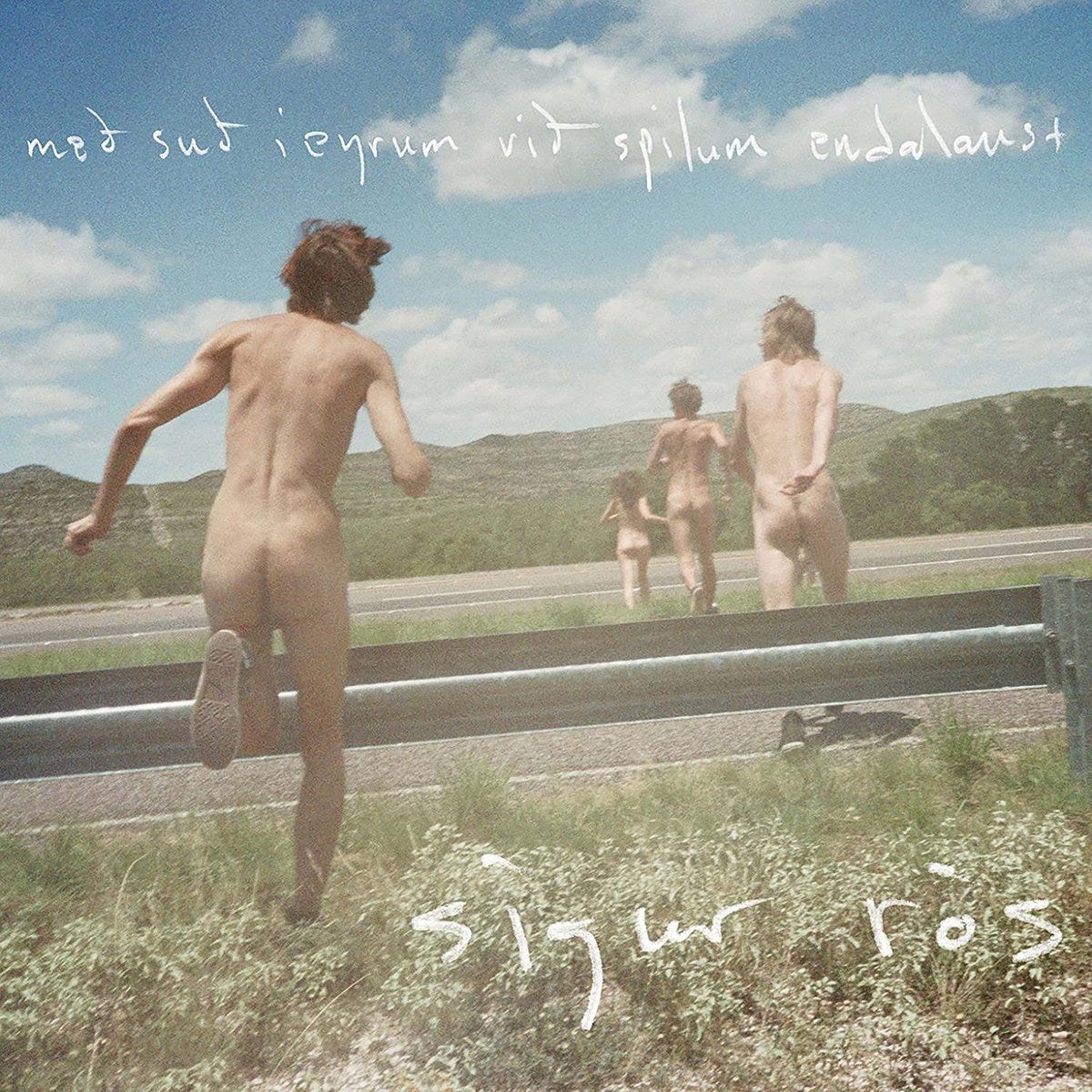
Með suð í eyrum við spilum endalaust by Sigur Rós (2008) - Post-rock
I had mentally filed this one away years ago as the record where Sigur Rós “went pop” at best and “fell off” at worst. Honestly I’m not sure either description quite fits. The first half of the album (I ain’t typing all that again) features a couple of tracks with more pep and momentum than previous Rós records, but the rest aren’t far off from Takk…. If anything they should have went *more* pop. “Gobbledigook” is one of their coolest tunes and I wish they had kept iterating on that high energy, fast tempo sound. The back half on the other hand is quite sleepy, though if you’re a bought-in Rós-buddy I doubt that will deter you. I suspect that this album’s bad reputation is a consequence of timing. By 08, Sigur Rós were a decade in the game and therefore a known element. People had by now got gist and were ready for something new. Only a year later the indie world would get rocked by releases by Animal Collective, Dirty Projectors, and Grizzly Bear, all of which rendered our Icelandic pals old hat. Heck, you could even speculate that this album’s simplifications were their attempt to pre-empt that sea change and ride it straight into the new festival landscape. Why else literally name a song “Festival”?

Unblessing The Purity by Bloodbath (2008) - Death Metal
A quick and dirty four track EP heralding Mikael Åkerfeldt’s return and preparing the ground for The Fathomless Mastery. There’s little to say about this release that doesn’t apply to longer, more substantial Bloodbath projects. The songwriting is terrific as always (neat how motifs from the lead guitar parts reappear in small chunks as rhythm parts, that kind of thing) the playing is top notch, and the lyrics will scare your grandmother. The question that I’d like to ask per Unblessing is: why don’t death metal bands release EPs more often? 20 minutes is the perfect amount of time to spend getting your nerves rattled by extreme metal before the endings singe off entirely. I’d happily take new material in four song a year chunks instead of waiting two-three years for a 50 minute record that I get bored of halfway through.